Adult Children of Dysfunctional Families Healing
May 31, 2026
Why adult children of dysfunctional families healing feels so hard
Many adults assume healing should begin once they understand what happened. Insight matters, but insight alone rarely rewires the body, the subconscious, or the attachment wounds left behind by family dysfunction. You can know your parent was emotionally immature and still panic when someone is disappointed in you.
This is because trauma is not only a story in the mind. It is also a pattern in the body. It lives in the tightening chest, the urge to overexplain, the collapse after criticism, the inability to rest without guilt, and the reflex to abandon your own needs to keep the peace. For many adult children, love became linked to performance, hypervigilance, or self-erasure.
Healing can also feel hard because dysfunctional families often train children to mistrust their own perceptions. Maybe you were told you were too sensitive. Maybe your reality was minimized. Maybe no one helped you name what you felt. As an adult, that can show up as chronic self-doubt, confusion in relationships, and a painful habit of looking outside yourself for permission to exist as you are.
The hidden patterns adult children carry into adulthood
Adult children from dysfunctional homes do not all look the same. Some are anxious and visibly overwhelmed. Others appear highly competent and emotionally self-contained. Still, the underlying patterns are often similar.
Many struggle with codependency. They feel responsible for other people’s moods, choices, and comfort. They overfunction in relationships and then feel unseen, resentful, or emotionally drained. Others repeat abandonment patterns by choosing unavailable partners, tolerating mistreatment, or confusing intensity with love.
There is often a strong inner critic as well. That voice may sound harsh, urgent, perfectionistic, or ashamed. It pushes you to do more, be less needy, avoid mistakes, and stay pleasing enough to remain safe. Underneath that voice is usually an old fear: if I disappoint someone, I could lose connection, security, or love.
Another common pattern is emotional disconnection. Some adult children know how to care for everyone else but cannot identify what they feel or need. This is not a character flaw. It is often what happens when a child’s emotional life was ignored, mocked, or treated as inconvenient.
What healing actually requires
Adult children of dysfunctional families healing is not about becoming perfect, endlessly positive, or detached from the past. It is about becoming safe enough inside yourself that you no longer have to live on autopilot.
That usually means working on several levels at once. You need cognitive clarity so you can name the dysfunction accurately. You need emotional permission so grief, anger, fear, and sadness can move instead of staying frozen. You need nervous system regulation so your body can learn that the present is not the past. And you need behavioral change so insight turns into lived self-respect.
This is where many people get stuck. They try to heal only through thinking, reading, or analyzing. Those tools can help, but they do not always reach the younger parts of you that still expect rejection, engulfment, or emotional abandonment. Lasting change often happens when your healing includes the body, the subconscious, and the daily practice of choosing yourself.
A practical path for adult children of dysfunctional families healing
The first step is awareness without self-attack. Begin noticing your patterns in real time. What activates you? When do you fawn, freeze, overgive, shut down, or become afraid to speak honestly? Awareness matters most when it is compassionate. Dear One, your patterns make sense when you understand where they came from.
The second step is learning emotional and nervous system safety. Before deep processing, many people need stabilization. That may look like grounding, breathwork, meditation, journaling, prayer, somatic awareness, and learning how to interrupt spirals of shame or panic. If your body has lived in survival mode for years, safety may feel unfamiliar at first. Go gently. Slow is still progress.
The third step is grieving the family you did not have. This part is tender and often avoided. Healing asks you to face the truth that you may not have been mirrored, protected, soothed, or celebrated in the ways you deserved. Grief is not weakness. It is part of releasing fantasy and ending the painful hope that self-betrayal will finally earn love.
The fourth step is reparenting. This means building an inner relationship with yourself that is consistent, kind, and protective. You begin responding to your own fear with compassion instead of criticism. You learn to validate your feelings, honor your limits, and make decisions that reflect self-respect. Over time, your inner world becomes less hostile and more trustworthy.
The fifth step is boundaries. For adult children, boundaries can feel terrifying because they disrupt old family roles. If you were rewarded for being easy, useful, or self-sacrificing, saying no may trigger guilt. That does not mean the boundary is wrong. It often means the boundary is healthy and your conditioning is protesting. Boundaries are not punishments. They are how healing becomes visible in daily life.
What progress really looks like
Healing is rarely dramatic in the beginning. It often looks quiet. You pause before people-pleasing. You notice your body tightening sooner. You stop overexplaining. You feel guilt and still keep your boundary. You recognize that someone’s displeasure is not proof that you are bad.
Progress may also look like choosing different relationships. Not every connection can come with you. This is one of the harder truths in recovery. As you become more emotionally honest, some dynamics will no longer fit. The trade-off is real. You may disappoint people who benefited from your lack of boundaries. But you also make room for relationships rooted in mutual care, not survival.
There may be setbacks. Old triggers can return during stress, grief, parenting, divorce, illness, or family contact. That does not mean you failed. Healing is not linear because the nervous system heals in layers. Sometimes the next layer appears only after the first one feels safer.
When support matters most
Some people can begin healing on their own through education, reflection, and daily practice. Others need more structured support, especially if they carry complex trauma, dissociation, severe anxiety, or repeated abusive relationship patterns. There is strength in getting help that is trauma-informed and pattern-focused rather than purely intellectual.
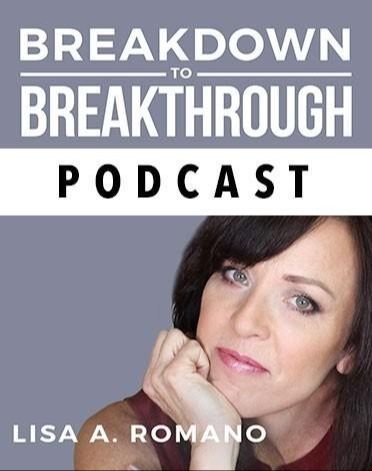
This is why so many people resonate with Lisa A. Romano’s work. It speaks directly to the subconscious roots of codependency, self-abandonment, and childhood trauma while offering practical tools for emotional regulation and identity restoration. For adult children, that kind of guidance can feel like finally hearing the language of their inner world spoken clearly and compassionately.
You do not need to earn healing by suffering longer. You do not need to prove your pain was bad enough. And you do not need permission to stop abandoning yourself. The child in you adapted to survive what was overwhelming. The adult in you now has the sacred opportunity to create something different - safety, truth, and a life that no longer requires you to disappear to belong.
Start there. Start with one honest breath, one boundary, one moment of self-trust. That is how a new legacy begins.
https://www.lisaaromano.com/store