How Childhood Trauma Affects Adult Relationships
Jun 13, 2026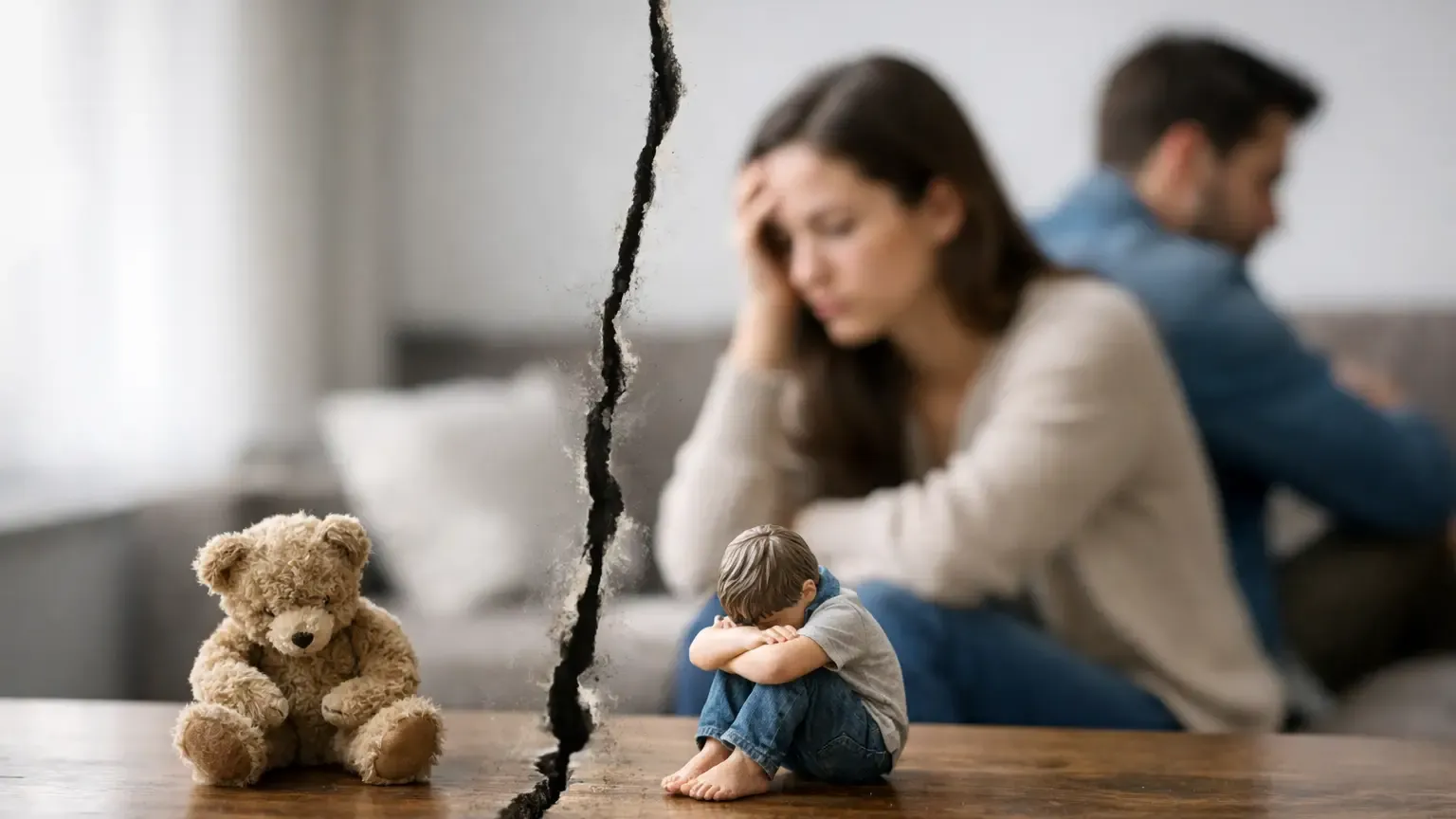
How childhood trauma affects adult relationships at the root
Childhood trauma is not only about what happened to you. It is also about what did not happen for you. Many adults carry relational wounds from emotional neglect, inconsistent caregiving, criticism, parentification, addiction in the home, or living with a narcissistic or emotionally immature parent. In those environments, a child often learns that love is unstable, conditional, or unsafe.
As a result, adult relationships can become the place where old programming gets activated. You may crave closeness and fear it at the same time. You may overgive, overfunction, or overexplain. You may choose emotionally unavailable partners and call it chemistry. Or you may shut down and tell yourself you do not need anyone, when underneath that independence is a history of hurt.
This is why insight alone is often not enough. You can understand your pattern intellectually and still feel pulled into the same relational dynamics. Trauma lives in the body, in the subconscious mind, and in the nervous system. If your early experiences taught you that intimacy equals danger, your body may react to healthy love as if it is unfamiliar territory.
Common ways childhood trauma shows up in love and connection
One of the most common effects is people-pleasing. If you learned early that your safety depended on keeping others happy, you may still monitor other people’s moods, silence your own needs, and feel responsible for everyone else’s comfort. This can look caring on the outside, but on the inside it often feels exhausting and lonely.
Trust can also become deeply complicated. Some trauma survivors trust too quickly because they are hungry for connection and validation. Others trust no one and keep emotional walls in place, even when they genuinely want love. Both responses make sense. Both are protective.
Many adults with childhood trauma also struggle with boundaries. If your boundaries were ignored growing up, you may not have learned that your no matters. You may feel guilty for disappointing people, terrified of rejection, or confused about where you end and someone else begins. In relationships, this can lead to resentment, burnout, and a painful loss of self.
Then there is the inner critic. If you were shamed, blamed, compared, or emotionally neglected, you may carry a harsh internal voice that says you are difficult, needy, selfish, or unlovable. That voice does real damage in adult relationships. It can make you tolerate mistreatment, overanalyze everything you say, or assume conflict means abandonment is coming.
Attachment wounds also play a major role. Some people become anxiously attached and feel consumed by fear when there is distance or change. Others become avoidant and pull away when intimacy deepens. Some move back and forth between both. These are not character flaws. They are adaptive responses to early relational pain.
Why healthy love can feel uncomfortable
This part surprises many people. Sometimes the most difficult relationship to receive is a healthy one.
If chaos, inconsistency, or emotional deprivation were familiar in childhood, calm may feel suspicious. A steady partner may seem boring. A kind person may trigger distrust. Honest communication may feel intense because it asks you to be present rather than perform a role.
Your body does not automatically choose what is best for you. It often chooses what is familiar. That is why someone can say, “I keep ending up in the same kind of relationship,” even when they desperately want something different. The subconscious is always trying to recreate what it knows until healing interrupts the cycle.
This is also why healing is not about judging yourself for your patterns. Shame will not free you. Compassion and truth will. You need to understand what your protective mechanisms were designed to do before you can teach yourself a new way to relate.
How childhood trauma affects adult relationships with self-abandonment
At the center of many unhealthy adult relationships is self-abandonment. This happens when you disconnect from your own feelings, truth, limits, and needs in order to maintain connection with someone else.
For many adult children of dysfunctional families, self-abandonment began very early. You may have learned to minimize your pain, become hyper-responsible, act mature beyond your years, or caretake others emotionally. In adulthood, this can turn into staying too long, settling for less, ignoring red flags, and confusing loyalty with love.
When you abandon yourself, relationships become unstable because they are built on adaptation instead of authenticity. You may feel unseen not because no one is looking, but because the real you has been hidden for so long that even you are not fully in touch with your own inner world.
The healing work is not just about finding better partners. It is about becoming safer for yourself. That means learning to listen inwardly, slow down automatic reactions, and stop negotiating away your worth.
What healing these patterns actually looks like
Healing does not mean you never get triggered again. It means triggers become information instead of identity. It means you begin to notice what is happening inside you before you disappear into an old pattern.
A practical place to start is nervous system awareness. When you feel panicked, rejected, numb, desperate, or overly responsible in a relationship, pause and ask: What am I feeling in my body right now? Trauma recovery often begins by helping the body recognize that the present is not the past. Slow breathing, grounding, journaling, walking, and moments of conscious stillness can help create that separation.
The next layer is developing a relationship with your inner child. That may sound unfamiliar at first, but it is deeply practical. When you feel abandoned, ashamed, or afraid in a current relationship, part of what is hurting may be younger than the moment itself. Instead of attacking yourself for being sensitive, try asking what this younger part of you needs to hear. Safety? Reassurance? Permission to say no? Validation that your feelings make sense?
Boundaries are also essential. Not performative boundaries, and not angry walls built from fear. Healthy boundaries are clear statements of self-respect. They help you stay connected to your truth without needing to control someone else. If this is hard for you, that does not mean you are weak. It may simply mean your conditioning taught you that boundaries threatened belonging.
It also helps to challenge trauma bonds and fantasy bonds. A trauma bond keeps you attached through cycles of pain, hope, and intermittent reward. A fantasy bond keeps you loyal to who you wish someone would become. Both can keep you stuck. Healing asks you to see what is actually here, not just what you hope will finally repair the past.
For many people, support matters. Therapy, trauma-informed coaching, recovery communities, and structured healing education can help you move beyond awareness into change. Lisa A. Romano’s work speaks directly to this deeper layer by helping adults understand codependency, subconscious programming, and the survival self that formed in childhood.
You can learn a new way to love
No matter how long you have been repeating painful patterns, healing is possible. You can learn that love does not require self-erasure. You can learn that someone else’s emotions are not your job to manage. You can learn to sit with discomfort without chasing, fixing, pleasing, or abandoning yourself.
This work takes honesty. It also takes gentleness. There may be grief as you recognize how early you learned to survive by disconnecting from your own needs. Let that grief be part of your healing, not proof that you are failing.
You are allowed to create relationships that feel calm, mutual, and emotionally safe. You are allowed to stop earning love through suffering. And if that feels unfamiliar, that is okay. Unfamiliar does not mean wrong. Sometimes it means you are finally walking toward the life your wounded younger self needed all along.
Learn to live above the veil rather than from below the veil, controlled by past childhood patterns rooted in survival.
https://www.lisaaromano.com/12-wbcp